


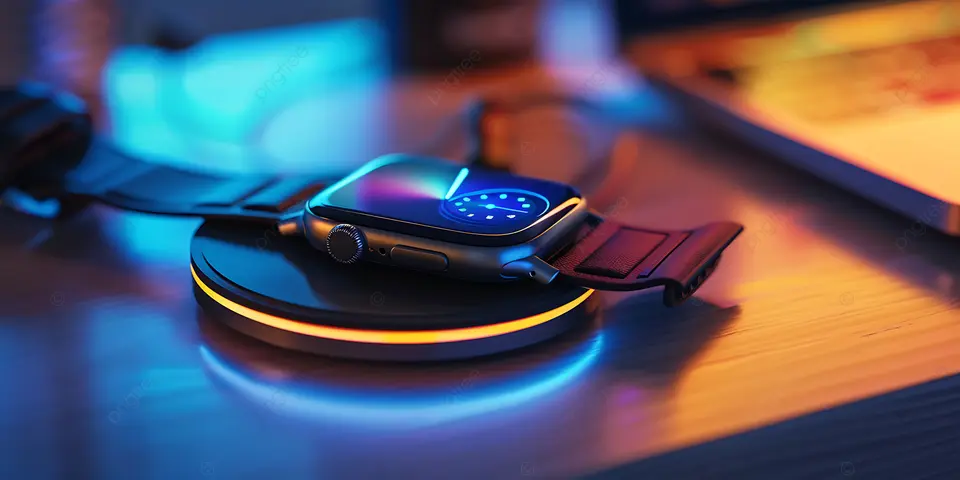
Wireless charging is a new trend in smartphones and other devices today. When many users leave their devices on a charging pad, they do not consider what happens behind the scenes. But How Does Wireless Charging Work?
This technology uses electromagnetic energy rather than conventional cables. It transfers the energy from a charging pad to your phone via induction. Through this guide, you will clearly understand wireless charging, including its operation, advantages, constraints, safety, and future potential.
What Is Wireless Charging?
Wireless charging is the transfer of electrical power without physical wires. You do not need to use a cable to charge your phone; instead, place it on a charging pad. The charger transfers energy to the device’s battery via electromagnetic fields.
The majority of current devices use the Qi standard, developed by the Wireless Power Consortium. This is the criterion used to ensure that the different brands of chargers are compatible.
Technology of Wireless Charging
To understand the principles of wireless charging, it is important to grasp electromagnetic induction. This is one of the rules that were discovered by Michael Faraday in the 19th century.
Sometimes, you are connected with a wireless charging pad, and the electricity flows through a copper coil in the pad. This produces an electromagnetic field. To give your phone to the pad, the phone also has another coil that absorbs the energy.
The electromagnetic energy is returned to an electrical current by the receiving coil. This charging current is the one that safely and effectively charges the battery. That is the bare-bones explanation of how wireless charging works on some everyday devices.
The Science Behind It: Electromagnetic Induction
The fundamental principle of wireless charging is electromagnetic induction. Two coils play a central role:
- Coil Transmitter
- Receiver coil (inside device)
- AC generates a magnetic field.
- The receiver coil induces a voltage in the magnet’s field.
- Electricity is converted into a battery charge.
This energy transfer can occur in case both coils are properly aligned. That’s why it is important to place it correctly on the charging pad.
Key Points of a Wireless Charging System
The primary components involved in understanding how wireless charging works must be fully known.
- Power Adapter – Will be plugged into a wall socket and provide electricity.
- Charging Pad (Transmitter) – The treatment coil consists of a copper coil that produces a magnetic field.
- Receiver Coil – Incorporated in a smartphone or accessory.
- Control Circuit – regulates voltage and prevents overheating.
- All components work collaboratively to provide an efficient and safe transfer of energy.
Regions of Wireless Charging Technology.
There is no single method of wireless charging. These technologies come in various types in the market.
Inductive Charging
This is the latest smartphone technique. It involves the proximity of the pad and device. It is safe and efficient for short distances.
Resonant Charging
With resonant charging, a small distance between coils is permitted. It employs magnetic resonance to enhance placement flexibility.
Radio Frequency Charging
This technique uses radio waves to transmit energy. It can charge gadgets over a wider range, but is less prevalent in the consumer electronics industry.
Is Wireless Charging Safe?
This raises many questions about the safety of electromagnetic charging. The answer is yes. Qi-compliant devices include additional safety features, such as temperature monitoring and foreign-object detection.
The Federal Communications Commission notes that properly certified wireless devices operate within a safe electromagnetic range. Even modern smartphones automatically prevent charging when they reach full capacity.
Efficiency and Power Loss
Efficiency is an issue with wireless charging. Some heat is lost by wireless charging. This is why it can get a little warm while charging.
Nevertheless, modern chargers also support 10W, 15W, and higher fast wireless chargers. Design and alignment systems for coils are advancing continuously to minimize power loss.
Advantages of Wireless Charging
There are many advantages of wireless charging for users worldwide.
- Reduces cable clutter
- Protects the damage to charging ports.
- Less risky in the open charge spots.
- Casual with office desks and bedside tables.
- Arguing with different devices.
The above benefits explain why wireless charging systems are becoming increasingly popular among consumers.
Limitations to Consider
Nevertheless, it has certain limitations despite its benefits. The charging speed may be lower than that of wired charging. There has to be proper alignment to get an effective transfer of energy.
Moreover, the use of thick phone cases can lower performance. Certain outdated devices require wireless charging adapters.
The Tomorrow of Wireless Charging
There is swift technological change. Businesses are developing wireless charging systems in the long run. In the future, innovations can enable charging various devices from a distance of a room.
Wireless charging is also in use in electric vehicles. Certain manufacturers are experimenting with wireless charging platforms on EV parking spaces. This demonstrates the effect of wireless charging on other devices other than smartphones.
Conclusion
You have now clearly understood how wireless charging works and why it is gaining popularity every year. It involves transferring energy by electromagnetic induction to transmit it safely and conveniently. Although it might not be as efficient as wired charging, it is convenient and innovative, which makes it appealing.
With advancing technology, wireless charging will become even more amazing, working at higher speeds and over greater distances. When changing the device, you can choose one that charges wirelessly, giving you more flexibility.
FAQs
How does wireless charging work?
It transfers power through electromagnetic induction.
Does wireless charging need the internet?
No, it only needs electricity.
Is wireless charging slower?
Usually, yes, slightly slower than wired charging.
Can I use a case?
Yes, thin cases usually work fine.
Does it harm the battery?
No, certified chargers are safe.
