


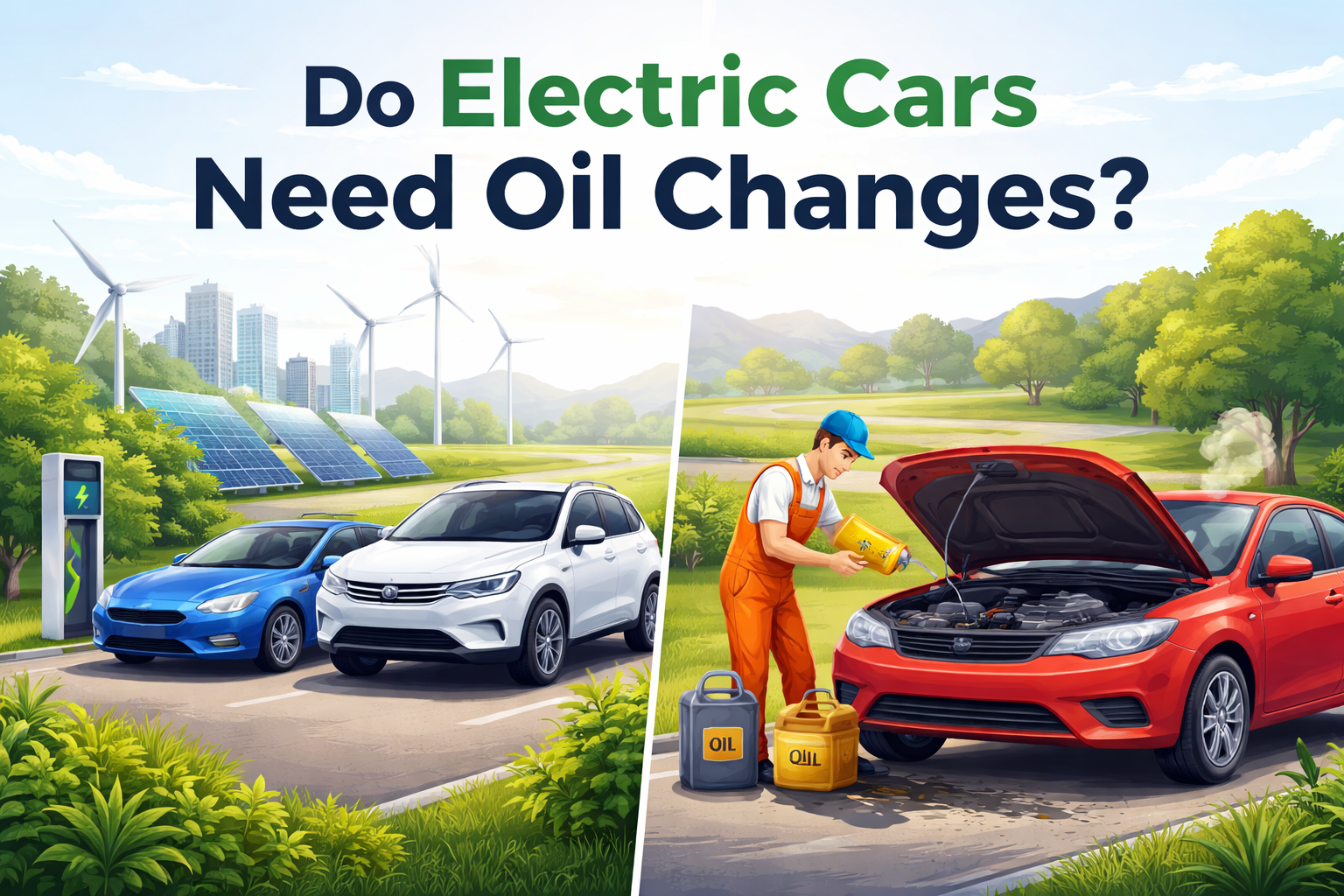
The advantage of electric cars over gasoline-powered cars is that the transportation industry would have access to clean energy and easier maintenance. The question that may be on the minds of new electric car owners is do electric cars require an oil change, or any maintenance? Electric vehicle (EV) maintenance should be understood to understand the car’s costs and efficiency over its lifetime. The ability to maintain the EV properly will enhance the car owner’s trust.
Electric cars apply electric motors. Internal combustion engines are used in gas-powered vehicles, which means they require oil to lubricate and cool the engine. That is why the difference in maintenance and servicing of EVs is so high. To determine whether electric cars need oil changes, one must first understand how EV components operate and how they differ from those of gasoline-powered vehicles.
Why Traditional Cars Require Oil Changes
Gas-powered vehicles rely on engine oil to prevent friction when the vehicle’s parts are in motion, keep them cool, and prevent overheating. The oil passes through the engine components and, over time, becomes dirty and loses its lubricating properties. Unless this oil is occasionally changed, the engine will not perform to its best, and the damage it causes requires no introduction. This is why this maintenance is required when handling internal combustion engines.
Oil changes will also be done periodically to prevent debris buildup and keep the engine clean. Oil changes help remove dirt and other contaminants (e.g., metal particles and combustion residues) that accumulate over time. Oils contaminated with impurities reduce engine lubrication efficiency, hastening the wear and tear of engine parts. That is why oil changes should be done once every 3,000 miles, as recommended by the manufacturer, to protect the engine and help the car stay fuel-efficient.
Do Electric Cars Need Oil Changes?
The short answer is not. Since electric cars do not have combustion engines, they do not need engine oil to heat and do not require regular changes. Electric vehicles have electric motors (fed by rechargeable batteries) instead of combustion engines, and electric motors have fewer moving parts, so they do not need lubrication (of course, none is applied).
However, electric cars are not devoid of oil-based lubricants (e.g., gear reduction, coolant, etc.). These lubricants have extended lifespans, and the lubricating oil does not require routine (or frequent) change. This implies that electric cars will not need oil changes, but they will need periodic maintenance to ensure everything is working as intended.
Key Maintenance Differences Between EVs and Gas Cars
| Maintenance Component | Gasoline Cars | Electric Cars |
| Engine oil changes | Required regularly | Not required |
| Spark plug replacement | Required | Not required |
| Transmission maintenance | Frequent | Minimal |
| Brake maintenance | Moderate | Less frequent |
| Cooling system | Engine-focused | Battery-focused |
| Exhaust system | Required | Not present |
What Fluids Do Electric Cars Actually Use?
EVs do not need to replace their engine oil like gas cars do, but they do require other fluids. These fluids are necessary for battery cooling, the braking system, and thermal management, which is why EV owners often wonder whether electric cars need oil changes, and why maintenance is often unpredictable.
EVs do require coolant, which helps regulate and prevent battery overheating. Brake fluid will be needed to support this system, and transmission fluid is used in the gear systems of some EVs. These fluids need to be replaced less frequently than engine oil, which translates into a significant reduction in maintenance and overall ownership costs.
Long-Term Maintenance Benefits of Electric Vehicles
Electric vehicles are easier to maintain than gasoline vehicles, which helps explain the growing adoption of EVs worldwide. When drivers ask if EVs need any maintenance, it’s nice to point out that the maintenance is much easier and less time-consuming.
Some of the key long-term maintenance advantages include:
- No engine oil changes
- Fewer mechanical parts
- Reduced engine friction and wear
- Reduced service costs
- Less frequent brake maintenance
- Simplified maintenance of the driveline
These benefits are just a few of the reasons electric vehicles are so appealing, and the less frequent maintenance helps improve vehicle ownership satisfaction and the vehicle’s long-term reliability.
Battery Maintenance Is More Important Than Oil Changes
EV care is less frequent, but other areas are more important than oil changes: battery care and maintenance. Batteries are not only the power source and ‘fuel’ that limit how far the vehicle can travel; they are also the ‘fuel’ that limits how far the vehicle can travel. Weekly, if not more frequently, inspections, along with careful management of where and how the battery is charged, can help keep the battery healthy and the vehicle operational for many years.
Modern electric vehicles have battery management systems with battery coolant that can be cooled and heated to prevent overheating. This coolant system is similar to an engine oil canister, but unlike an engine oil canister, the battery coolant system can go many years without being inspected. A battery management system can be not only a preventive maintenance system for fuel, but also an expense-avoiding system, as without a battery coolant management system and good battery care, the driver may incur an expense.
Understanding EV Drivetrain Lubrication
Do Electric Cars Need Oil Changes for Motors?
The best part of EV care is that electric motors, unlike combustion engines, do not require oil changes, which saves drivers time and money. The only time they would have to do maintenance on the electric motor is if there are gear system lubricants, which do require replacement every so often, but these are not like engine oil and do not have to be changed.
This is why electric cars need oil changes is a common question. EV motors are designed for durability and efficiency, reducing maintenance needs and improving reliability over the long term.
Cost Savings From Eliminating Oil Changes
Gasoline vehicles have recurring expenses for oil changes and maintenance. This involves expenses for oil, filters, and labor, which can add up to thousands of dollars over a vehicle’s lifetime. Electric vehicle (EV) owners, however, do not incur oil changes as a cost because they don’t have them. This leads to lower total cost of ownership for consumers and greater affordability of EV ownership compared to gasoline vehicles.
Not only do EV owners eliminate one expense, but they also reduce maintenance costs. EVs have fewer moving parts, which means servicing and repairs are needed less often. This is why EVs are a good economic choice in the long run. All of this is to say, why else isn’t it difficult to understand why more and more consumers are choosing to drive EVs?
Environmental Benefits of Reduced Maintenance
Besides not using oil, the environmental impact of EVs is no longer sending used oil to landfills. Oil that is not disposed of safely and sustainably can cause severe environmental damage. This makes EVs an eco-friendly choice for consumers because they do not require oil changes, and used oil does not end up in landfills.
No oil changes means an increase in the eco-friendly benefits of using an EV. The fewer maintenance resources consumed, the less maintenance waste generated. This also means that as EV usage grows, oil use declines and organized waste increases, while ecosystems are less polluted and oil waste is reduced. It is a good and accountable means to achieving sustainability targets worldwide.
When Should Electric Vehicles Be Serviced?
Electric cars may also need less maintenance than internal combustion cars, but maintenance should still be observed. Maintenance and inspection of the brakes, tires, cooling systems (and further the battery), and other electrical parts are important in the proper operation of the car. Qualified personnel can also identify problems that affect the car’s consistency, safety, and ideal performance.
Actually, manufacturers have established rules specifying security inspections and service schedules, rather than just regular oil changes. Guidelines will be specific to the individual vehicle, depending on its usage and model. This is part of how the manufacturer maximized the vehicle’s performance and efficiency, and it is also partially up to the user to ensure that the guidelines are adhered to throughout the vehicle’s lifespan.
Common Misconceptions About EV Maintenance
It is a common misconception that electric vehicle maintenance is similar to that of gasoline cars. As a result, people become confused when they are told to ‘just have the oil changed’ or that EVs don’t require maintenance. A little understanding of EV technology will help drivers learn to avoid the confusion that EV maintenance can cause and to avoid unnecessary maintenance.
Traditional vehicles have a more complicated and more difficult-to-maintain design than electric vehicles. A gasoline vehicle’s design includes a combustion engine, oil, spark plugs, an exhaust system, and numerous more complex mechanical components. EVs reduce the experience of maintenance and ownership, making it even more convenient than the former gasoline cars.
Conclusion: Do Electric Cars Need Oil Changes?
EVs are not defined by matters of engine oil maintenance as gasoline cars are. EVs do not require any combustion engine-based maintenance because they use an electric motor that does not require servicing, and the battery system requires less maintenance than gasoline vehicle alternatives. Justifying the maintenance-free EV ownership experience is as simple as understanding whether electric cars need oil changes and explaining the multitude of benefits.
The aforementioned maintenance-free features explain the benefits of EV ownership, including reduced maintenance costs, improved EV reliability, and a positive overall impact on the environment. Remember that EV battery care is extremely vital, and while some maintenance is required, maintenance will not include oil changes! Owning an EV is a maintenance-free experience that offers numerous benefits and saves you time and money.
